
Oxygen may provide fast relief for cluster headaches , with newer delivery methods improving efficiency and portability.
Oxygen therapy for cluster headaches is a widely used approach for managing attacks, especially when rapid relief is needed. Cluster headaches are a rare, compared to migraines, but extremely severe type of primary headache disorder characterized by intense, one-sided pain—often centered around the eye or temple. Attacks can last anywhere from 15 minutes to several hours and may occur multiple times per day during active periods (often called “clusters”).
Because of their intensity and frequency, cluster headaches can significantly impact daily life, making fast-acting treatment options especially important.

Oxygen therapy for cluster headaches is widely recognized as one of the primary treatments for acute cluster headache attacks. It is typically used at the onset of symptoms and may provide relief within minutes for some individuals.
Clinical studies and medical organizations have reported that a significant percentage of patients experience meaningful improvement when using oxygen therapy under medical supervision.
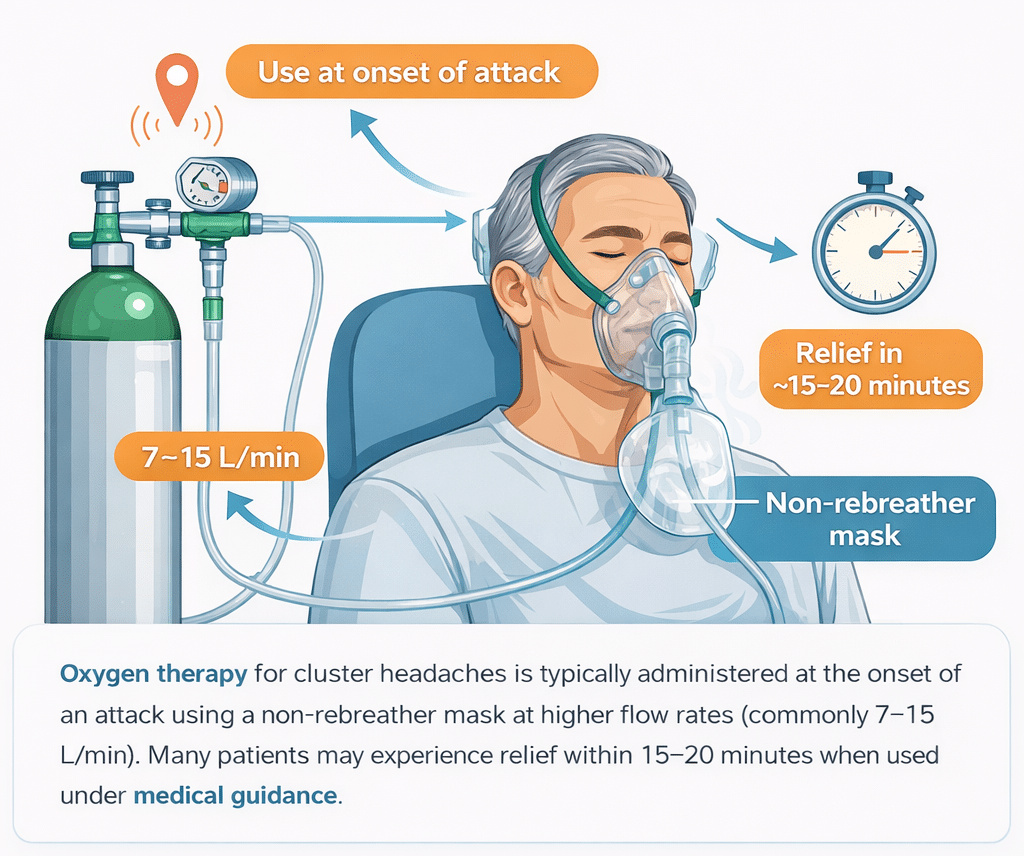
Traditional oxygen delivery methods may present challenges in real-world use:
Traditional systems often deliver oxygen continuously, even when the user is not actively inhaling. This can reduce efficiency and lead to unnecessary oxygen waste.
Traditional delivery methods typically send oxygen to both nostrils without accounting for differences in nasal resistance, which may waste oxygen and contribute to nasal dryness or discomfort.
Systems that rely on higher flow rates are often paired with heavier tanks and less portable setups, making them harder to carry and use outside the home.
Mask-based delivery may restrict movement during use and can make it more difficult to speak or interact comfortably while receiving therapy.
These limitations highlight the importance of how oxygen is delivered—not just how much is delivered.
The Apogee System is designed to improve how oxygen is delivered—focusing on timing, efficiency, and real-world usability.
Instead of continuous flow, oxygen is delivered at the start of each breath, helping reduce waste and improve efficiency.
By delivering oxygen to the nostril with lower resistance, the system is designed to improve delivery effectiveness and comfort.
Efficient delivery may allow effective use at lower flow rates, supporting smaller, more portable oxygen setups.
Without the need for a full mask, the system may allow greater freedom of movement and easier communication during use.
Learn how oxygen delivery technology can support a more flexible therapy experience.